If you’re planning a trip to Egypt, you should definitely check out some of these cool and unique places to visit. You will probably know some of these sites, but others are located in areas where tourists rarely venture. From Sufi dances to deserts to ancient mudbrick towns, there are sure to be some places that appeal to adventurous backpackers!
1. Siwa Oasis
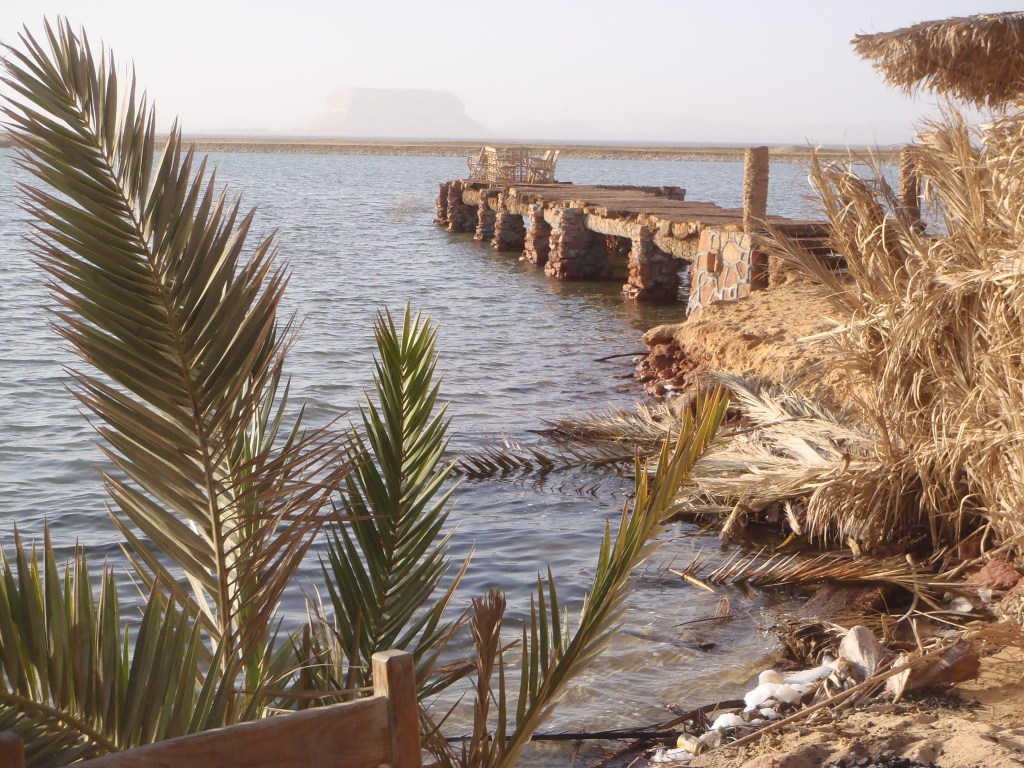
Siwa is located far off the beaten path close to the Libyan border. The oasis is famous for its delicious dates and olives, whose trees can be seen everywhere you go. It is also the home of the Siwa oracle, which was widely known in ancient times. Even Alexander the Great came to Siwa especially to consult the oracle. You can visit the ruins of this temple, as well as the last standing wall of the Temple of Amun and the Mountain of the Dead, a hill housing numerous 26th Dynasty tombs that you can explore.
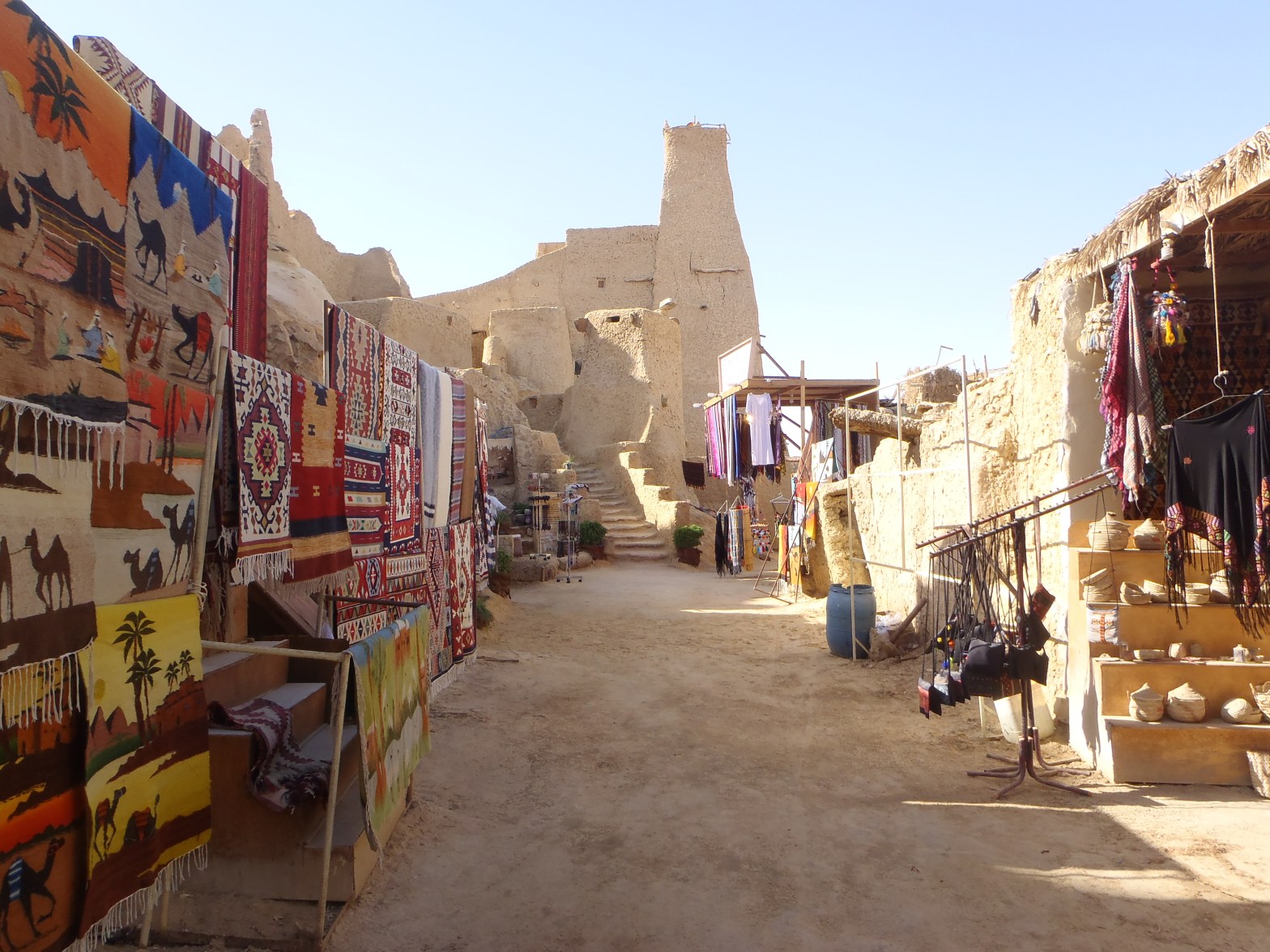
The centre of the town is dominated by a large fortress called Shali (see feature image) and mudbrick houses that were built in the 12th century. It is also fun to explore Siwa’s two springs, Cleopatra’s Pool and Fatnas Island, where you can relax with a cup of Siwa tea. Be sure not to miss a trip into the desert to see the Great Sand Sea!
There are a number of hotels around and Abdu’s serves the most delicious (and very cheap) food in Egypt! You can rent a bike or hire a donkey cart to visit some of the sites that are further away.
2. Dakhla Oasis
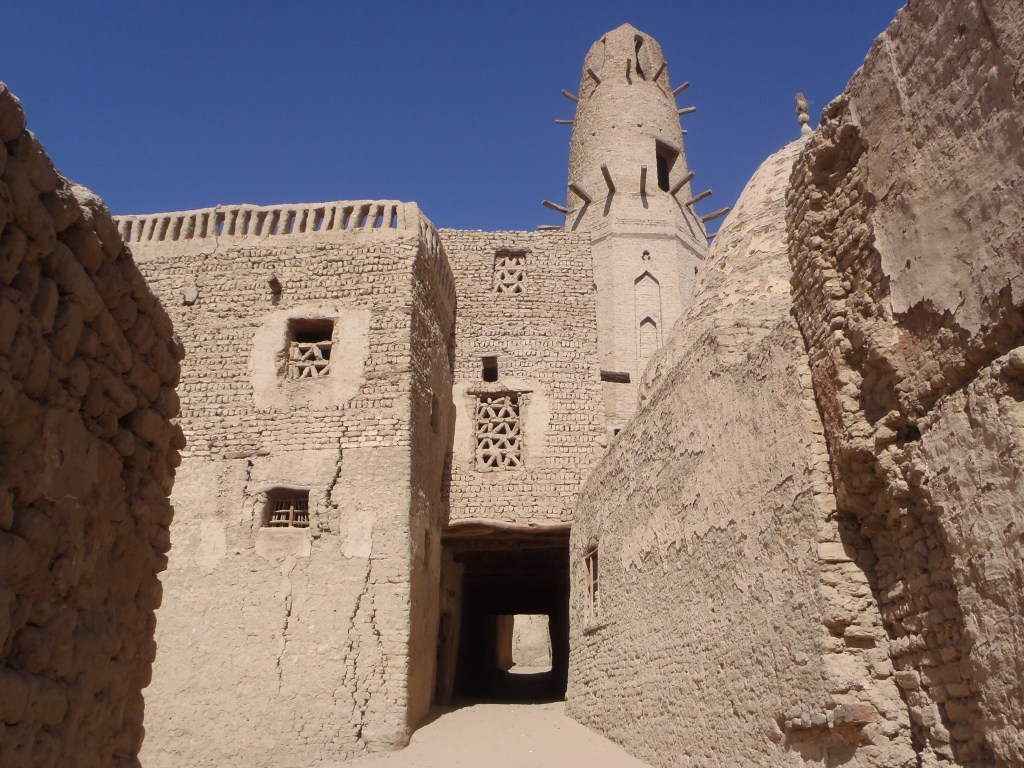
Dakhla is one of a string of oases in the Western Desert. From the main town of Mut, it’s easy to take a micro bus to the 12th century mudbrick towns of Balat and Al-Qasr. It’s fun to wander around the quiet alleys, though you have to be careful when peeking into houses – people still live in some of them! At Al-Qasr, you can also climb up a mudbrick minaret for a great view of the area. Mut also has an old city to explore, though it is not as extensive as the other two.
There are numerous archaeological sites and springs around the oasis, but you will need to hire a driver to take you around.
3. Mt Sinai & St Catherine’s Monastery
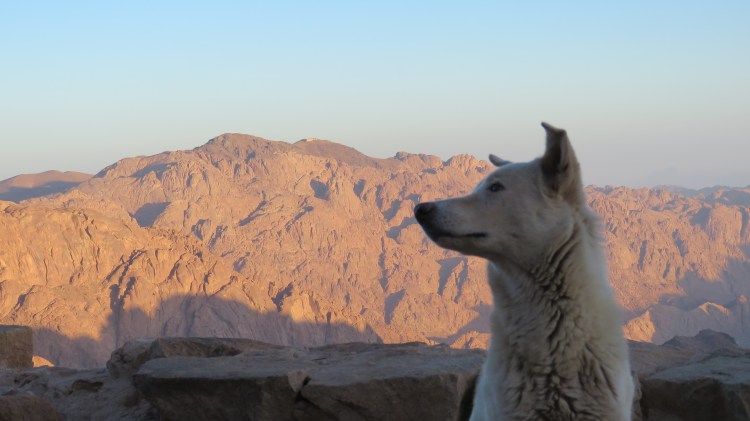
Famous as the place where Moses received the Ten Commandments, Mt Sinai is equally well known for its stunning scenery. Hiking up the mountain at night to see the sunrise is truly an unforgettable experience. There are two paths, and you can ask your guide to walk down the steps of repentance for a different view on the way down.
Once you reach the base, you can visit St Catherine’s Monastery, although you may have to wait a while for it to open. Much of the monastery is closed off, but it’s still worth having a look around.
Unfortunately, it has become unnecessarily complicated to visit this special site. We couldn’t find any public transportation, so we had to go with a tour, which can be organized at tourist centres such as Dahab. Although our tour ended up leaving too late (and we practically had to run up Mt Sinai), it’s normal to leave late at night so that you have time to climb up before sunrise. Make sure you bring a torch!
4. Sufi Dances
Another unique thing to do in Egypt is to see a Sufi dance. There are performances throughout Egypt, but the best is the Al Tannoura Dance Troupe in Islamic Cairo. It takes place in a beautiful building dating back to 1504, which really adds to the performance.
The show begins with a music performance with songs played on traditional instruments such as the oud and drums. After a while, a singer joins in. The music reverberates off the stone walls of the room, creating a mesmerizing effect.
During the second part, the dancers come out wearing several layers of colourful skirts and start spinning to the music. They move the top skirt up and down their body and eventually spin it above their heads and around them, then take it off and start again with the next skirt. The dancing puts them in a trance and they can keep spinning for 45 minutes or so at a time. It is an incredible performance to watch!
5. Khan el-Khalili
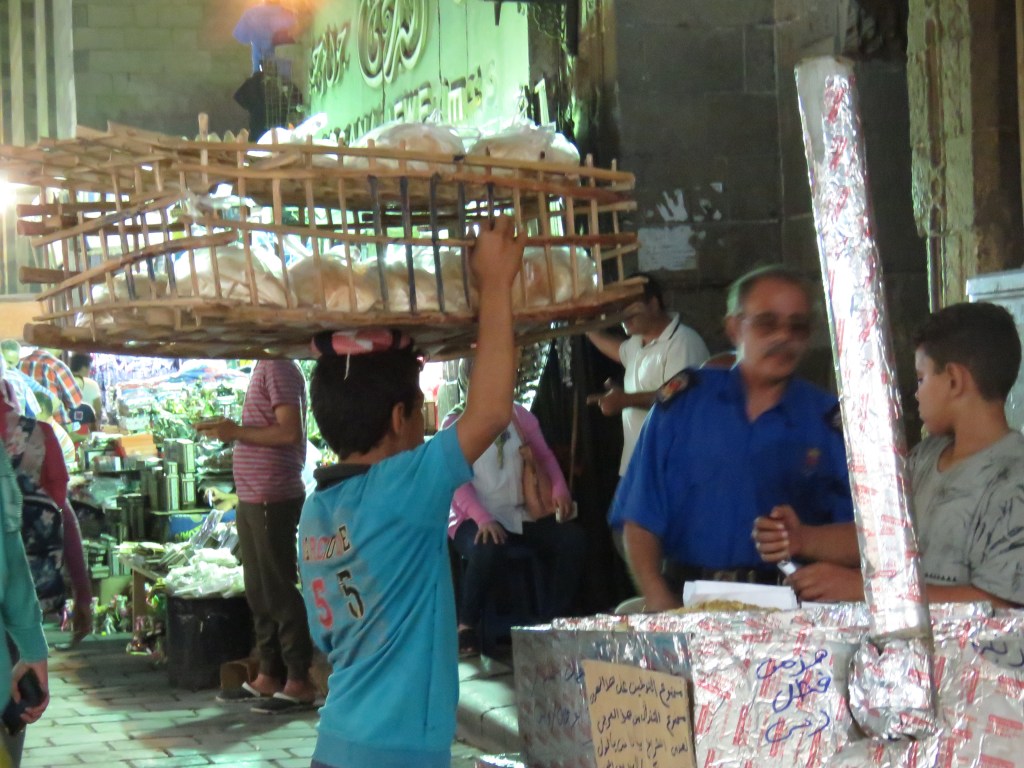
Cairo is known as the “city of a thousand minarets,” many of which are located around Khan el-Khalili in Islamic Cairo. This crazy, bustling market is a fascinating place to explore. You can find all sorts of merchandise here, from leather camels to statues of Egyptian gods. Once you go beyond the tourist market, you will see fruits and all sorts of household goods. See if you can find the last fez maker in Egypt!
While you are walking around, you will pass lots of mosques. You can go inside and have a look around, and maybe even go up the minaret for a view of the city. Make sure you leave your shoes outside and women must have a scarf to cover their head.
If you need a break from exploring, sit down at one of the many coffee shops, such as Al-Fishawy’s, for some Turkish coffee. Be prepared for all the people who come by and try to sell you the most random things, from pillow covers to plastic birds on a string which they swing over your table. It’s always fun to see who will come by next!
6. Shelatin
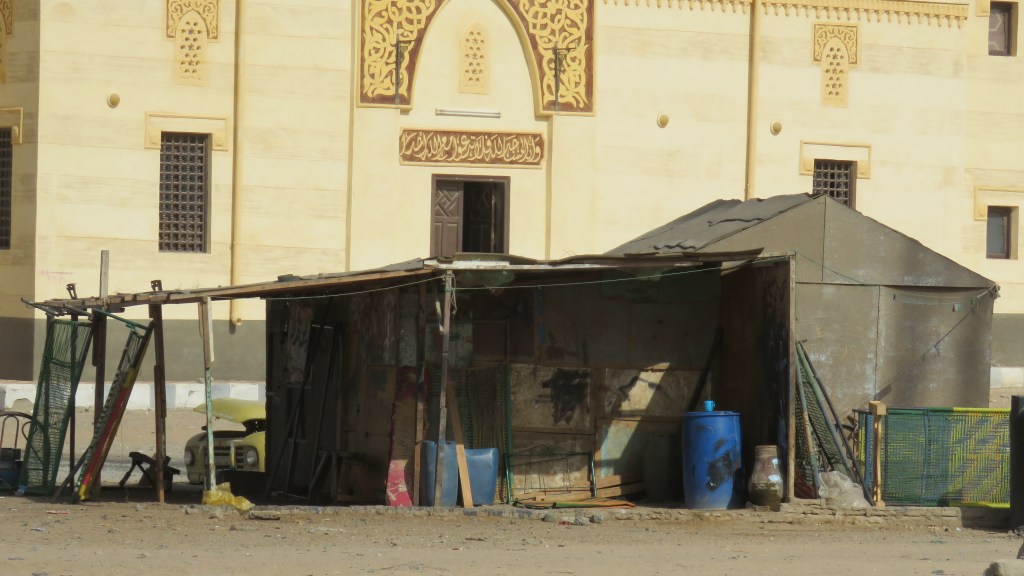
Located in the southeastern corner of Egypt, almost in Sudan, Shelatin is really out of the way for most tourists. In fact, when we passed the last checkpoint before entering the town, a police man laughed at us – he couldn’t believe there were tourists coming to Shelatin!
Despite his reaction, it’s a fascinating place to visit. Some of the people are incredibly poor and build their homes of anything they can find, such as cardboard. Next to their dwellings is a large, beautiful mosque. Despite living in such conditions, the people here are some of the friendliest I have met in Egypt and they are so happy to see tourists visit.
Shelatin is famous for its camel market. Various tribes bring their camels up from Sudan to sell the animals and lots of different crafts. We really wanted to see this market, but when we got there, we just found a few lonely camels in a pen – apparently there is no market during Ramadan! But even so, it was very interesting to see this part of Egypt.
7. Dahshur
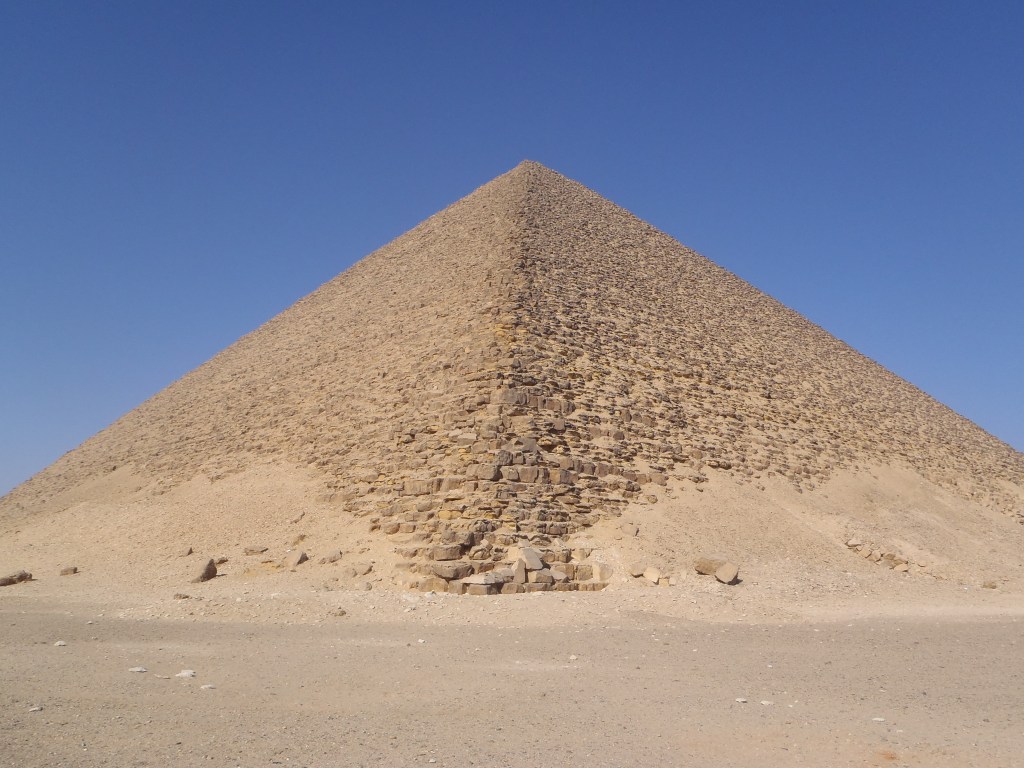
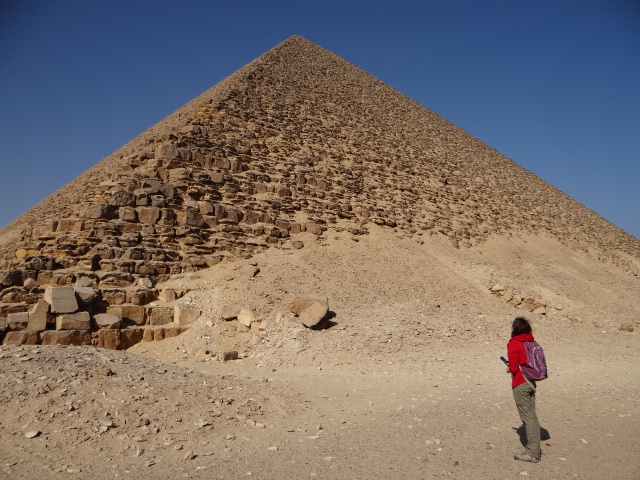
Although not frequented by tourists, Dahshur is an important archaeological site with two pyramids. The Bent Pyramid is characteristic because the builders changed the angle halfway through construction. The Red Pyramid, built by the same pharaoh, Sneferu, is the first true pyramid, with smooth sides like those at Giza.
I love going to Dahshur because it’s so empty there – you’re almost alone with the pyramids. You can also go inside the Red Pyramid, which is always exciting! Dahshur is only a little further south than Saqqara, so it’s easy to visit both sites in one trip.
8. Dendera
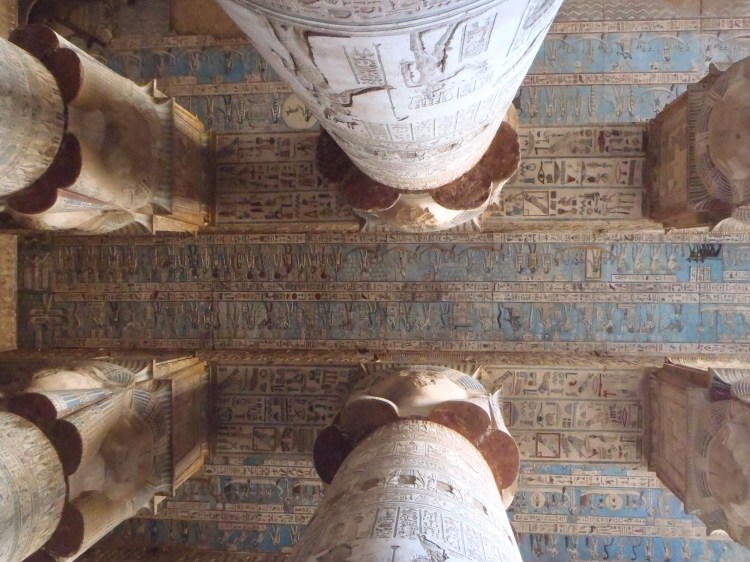
Dendera is my favourite temple in Egypt! It dates to the Ptolemaic and Roman Periods, so quite late for ancient Egypt, but it is absolutely gorgeous! When you walk in, everything is painted blue. The columns, the walls, the ceiling – they are all covered in reliefs and inscriptions that use blue as the main colour.
When you go up to the roof, you pass through some very different passage ways. They are narrow, darker, and covered by unpainted reliefs.
You can arrange a taxi to take you to Dendera and Abydos (see #9) from Luxor for the day. It’s definitely worth the trip!
9. Abydos
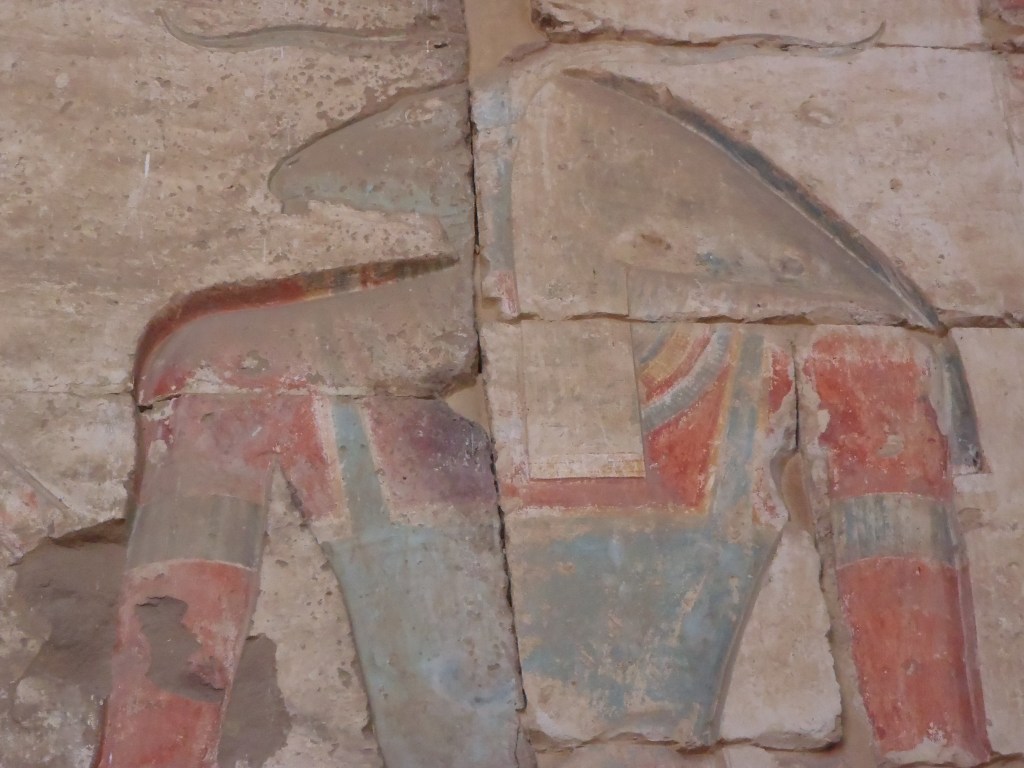
Abydos was one of the most sacred sites for the ancient Egyptians since it is the place where the god Osiris was supposedly buried. The first pharaohs built their tombs here, and many subsequent pharaohs constructed temples.
Only the temple of Seti I is open to the public, but it’s a beautiful temple to visit. It is well preserved and many of the reliefs are painted. There are seven small chapels to different gods in one part of the temple and you can see the famous king’s list, which lists all of the pharaohs who ruled until Ramesses II (Seti I’s son who finished the temple).
It’s a good idea to visit Abydos and Dendera (see #8) on the same trip since they are relatively close to each other. You can hire a taxi from Luxor for the day and maybe even find some other people from your hotel to join you and split the cost.
10. Tanta Archaeology Museum
The Tanta Museum finally reopened in August 2019 after being closed for 19 years! It focuses on archaeological sites in the Delta and, although it is not that big, it still has over 2,000 artefacts on display. In addition to remains from pharaonic Egypt, there are also displays focusing on Greek, Roman, Coptic, and Islamic cultures. The cabinets are beautifully arranged and labeled.
Not many tourists venture up to Tanta, but it is an easy train ride from Cairo. And any archaeology fans will love this museum!
Of course, be sure to visit the Giza pyramids, Cairo Museum, the pyramids, tombs, and Serapeum at Saqqara, Luxor, and Abu Simbel while you are in Egypt! These are very popular sites and are certainly worth visiting!
I hope you found some inspiration for your next trip to Egypt. Have you visited some of these places before? Do you know of any more unusual destinations in Egypt?
 Off the Map Journeys